Manufactured Home Prices in 2026: A Complete Buyer's Guide

At our sales centers across North Dakota, South Dakota, and Minnesota, the first question buyers almost always ask is: what does a manufactured home actually cost? It sounds simple, but manufactured home prices in 2026 depend on more than just the sticker price on a floor plan brochure. The real number is a combination of home type, your location, site conditions, and setup costs that most buyers don't factor in until they're already deep in the process.

At Liechty Homes, we've spent decades helping Upper Midwest families get into quality homes, and we've walked through this budget conversation more times than we can count. This guide gives you the actual numbers, the line items people miss, and a realistic framework so you know what to expect before you ever walk into a sales center or talk to a lender.

Manufactured home prices in 2026: singlewide, doublewide, and modular costs compared

Singlewide home prices: affordable entry point

New singlewide homes currently range from about $60,000 to $100,000, with the national average landing around $82,000 to $88,500 according to Census Bureau manufactured housing survey data through mid-2025. Entry-level models start as low as $59,900, but upgrades push that number up quickly. At roughly $62 to $90 per square foot for 500 to 1,500 square feet of living space, a singlewide is the most affordable way into a new HUD-code home.

This option works well for first-time buyers on tight budgets, retirees looking to downsize, and rural landowners who need a practical, durable home without a large price tag. The tradeoff is size: a singlewide is a great fit for one or two people but can feel cramped for larger households.

Doublewide home prices: the most popular choice

Double-section homes account for the largest share of new manufactured home shipments, and the pricing reflects that steady demand. New doublewides currently range from $120,000 to $165,000, with double-section averages stabilizing around $160,000 to $165,000 based on the latest Census Bureau data. At $55 to $90 per square foot across 1,000 to 2,500 square feet,  doublewides often deliver better value per square foot than singlewides because fixed costs like transport and setup get spread across more living space.

Floor plan variety is another reason buyers gravitate toward doublewides. You get real bedroom separation, full kitchens, and open living areas that feel comparable to a modest site-built home, at roughly half the cost. If you're researching mobile home prices alongside manufactured home options, doublewides fall under the modern HUD-code manufactured home category, which has stricter safety and construction standards than pre-1976 mobile homes.

Cavco Doublewide The Modern Farm House

Modular homes: more structure, higher price

Modular homes are built to local building codes rather than HUD code, and they're installed on permanent foundations. That distinction changes both the construction process and the price. Fully installed, modular homes in the Midwest typically run $160,000 to $320,000, with cost per square foot ranging from $80 to $175 depending on finish level and site complexity.

The higher price tag comes with real advantages. Modular homes appreciate more like site-built homes when they're on a permanent foundation, and they qualify for conventional mortgage financing more readily than HUD-code manufactured homes. For buyers thinking long-term about resale value and financing flexibility, the premium is often worth it. See our Financing A Manufactured Home resource for more on loan options and requirements.

The real total cost: what most buyers forget to budget

Delivery, setup, and installation

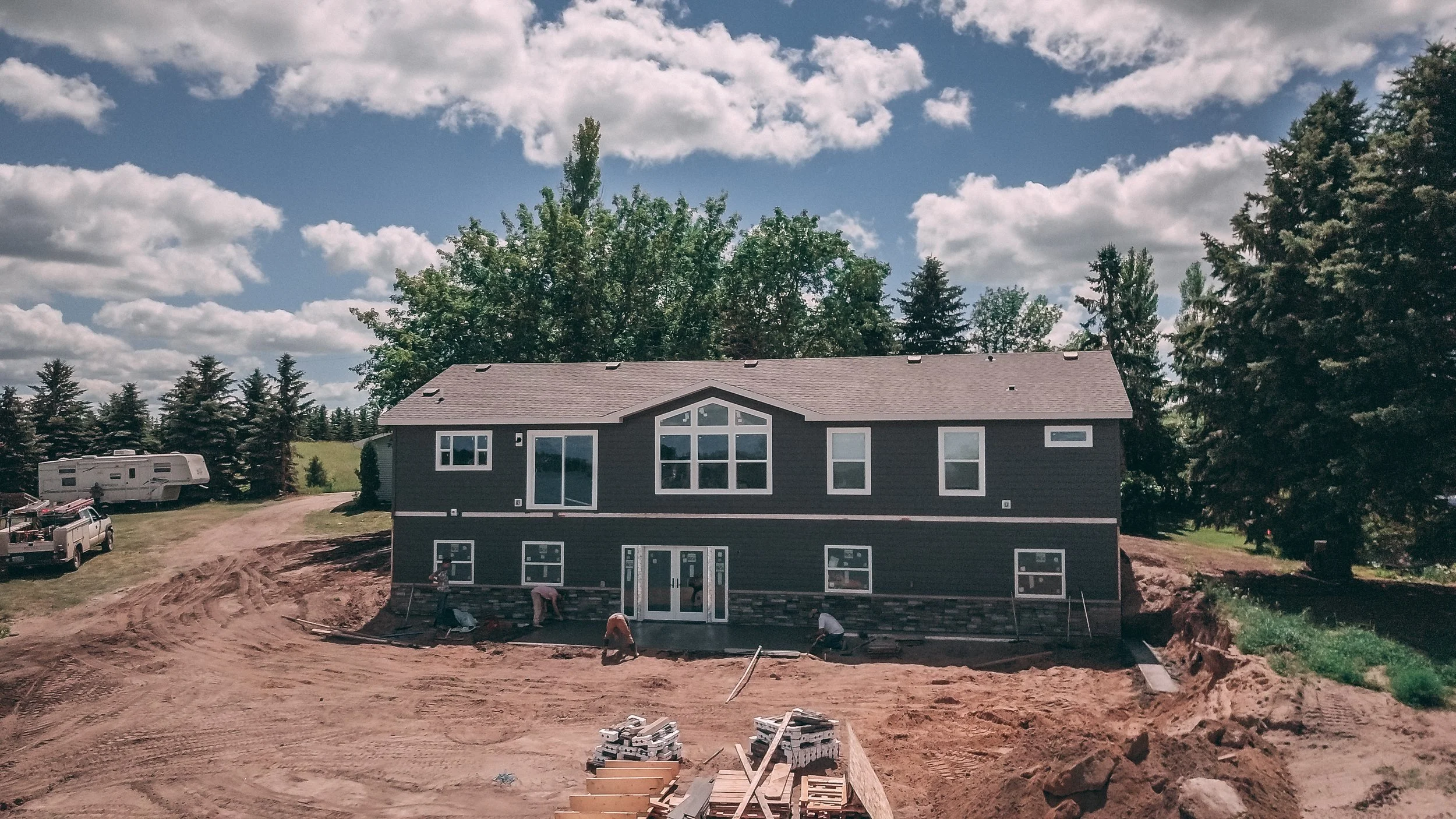
The base home price is only the beginning. Delivery for a singlewide runs $3,000 to $6,500, while a doublewide delivery costs $8,000 to $11,500. Installation and setup add another $3,000 to $15,000 on top of that, depending on section count, site access, and labor in your area. Rural Midwest sites with long haul distances or difficult terrain push these numbers toward the top of the range.

Buyers who budget from a catalog price and forget these line items are often caught off guard at closing.  Treat delivery and installation as a required line item, not an optional add-on.

Foundation, site prep, and utility hookups

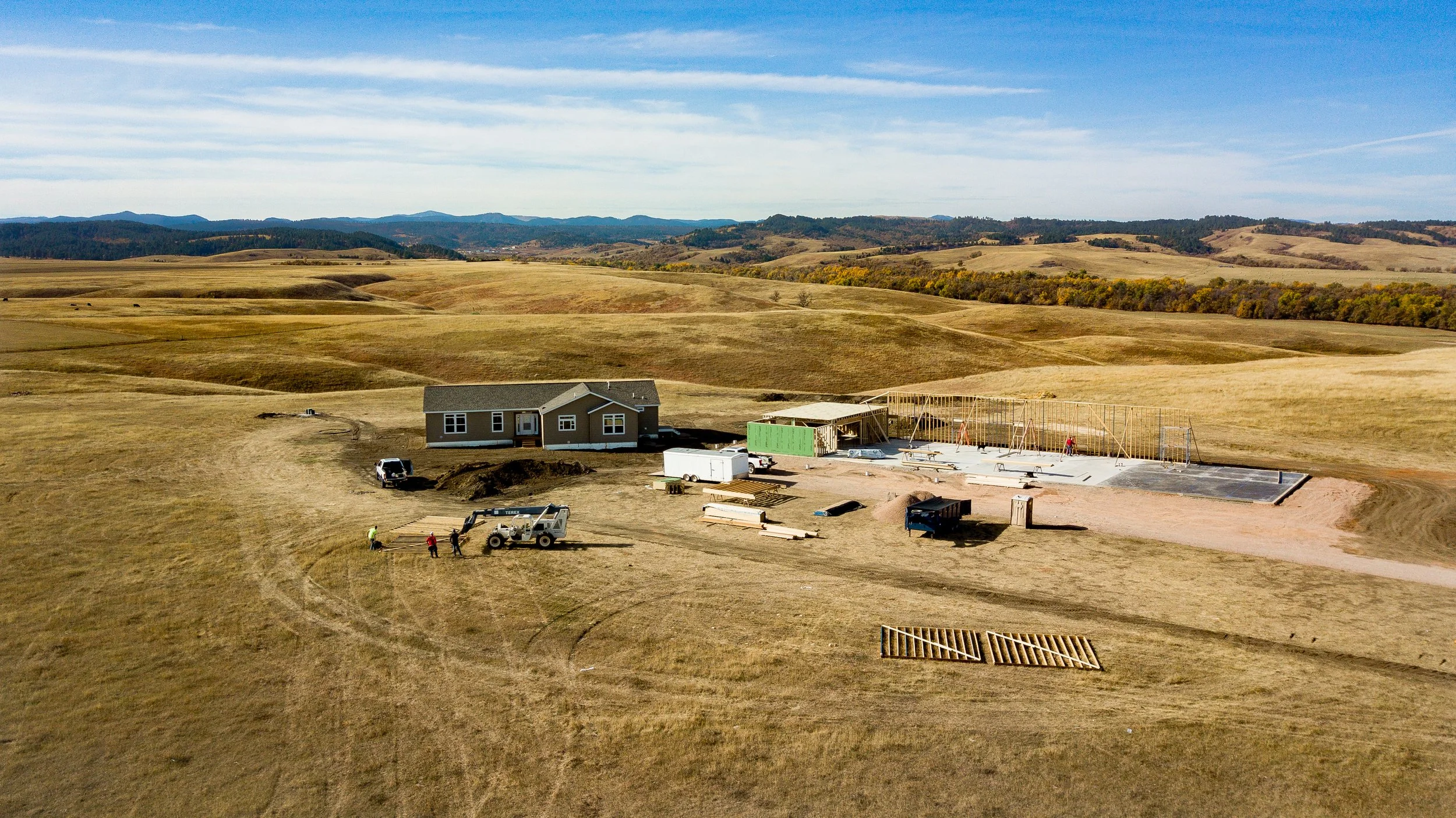
Manufactured Home Job site in the Black Hills of South Dakota

This section of the budget is the biggest variable for rural landowners starting from scratch. Here's what to expect for the major line items:

  • Pier/beam foundation: $5,000 to $10,000 (basic); crawl space: $6,000 to $25,000; full slab or basement: up to $80,000-$100,000

  • Site prep including grading, clearing, and soil work: $1,000 to $11,000

  • Utility hookups for well, septic, and electrical service: $10,000 to $35,000 depending on what already exists on the land

In North Dakota and South Dakota especially, foundation requirements are serious. According to state installation guidelines, the frost line runs 48 to 60 inches deep, which means footings must be engineered for those conditions. A gravel pad might be the cheapest option on paper, but it won't satisfy FHA financing requirements or protect the home through a hard winter.

Permits, skirting, and finishing touches

Building permits typically run $500 to $2,000 depending on your county. Skirting adds $2,000 to $8,000, and steps or a deck can add another $2,000 to $8,000. None of these are optional costs in practice: permits are required, skirting is commonly required by local jurisdictions and lenders, and you need entry access to your home.

Put it all together and a realistic estimate for a singlewide on owned land adds $15,000 to $40,000 above the home's base price. For a doublewide on a rural site where utilities need to be brought in,  budget $40,000 to $100,000 in additional costs beyond what you paid for the home itself. These aren't worst-case numbers; they're the normal range for a full rural setup.

New vs. used manufactured home prices: how they compare

What a new home costs and what you get for it

New HUD-code homes average $200,000 to $250,000 nationally, based on figures from the Census Bureau and Manufactured Housing Institute through early 2026. What you're buying with that price is warranty coverage, modern energy efficiency, and full customization from the factory floor. Working through manufacturer partners like Schult Homes, BonnaVilla, and Cavco means the home meets current quality standards and comes with builder protections that cover your investment from day one.

New construction also means no surprises in the walls. The roof is new, the HVAC is sized correctly, and the electrical is up to current code. That certainty has a real dollar value when you're financing a home and counting on it to hold up for decades.

Used home pricing and what to watch out for

Pre-owned singlewides typically sell for $10,000 to $90,000 and used doublewides for $70,000 to $150,000, putting used homes roughly 40 to 60 percent below new prices. That gap is real, and for buyers who know what to inspect, a well-maintained used home can be a strong value. The key condition factors that drive resale value are post-1976 HUD compliance, roof condition, HVAC and plumbing system age, and whether the home sits on a permanent foundation.

A very cheap used home, however, can easily cost more in repairs than the savings suggest. Structural issues, outdated wiring, and deferred maintenance on a $25,000 home can generate $20,000 in repair costs quickly. Here's how to think about it: choose new for certainty and customization; choose used for savings only if you're willing to do a thorough inspection before you commit.

Regional manufactured home prices: what Midwest buyers actually pay

National averages vs. Midwest reality

The Midwest is consistently among the most affordable regions in the country for manufactured housing. State averages for new manufactured homes reflect that clearly: Kansas averages $110,780, Missouri $111,642, and North Dakota $150,00, all well below the national average of $123,000 to $128,000. These state-level figures reflect base home-only pricing, not full installation, but they confirm the affordability advantage that Midwest buyers hold over their coastal counterparts.

Rural land costs in the Midwest reinforce that advantage further. Land in North Dakota, South Dakota, and Minnesota often runs $5,000 to $30,000 per acre in rural areas, based on USDA land-value surveys, compared to much higher prices in coastal markets. For buyers who own land or are purchasing affordable rural property,  the total ownership equation in the Upper Midwest is hard to beat.

Search our listings for manufactured homes on land for sale near me.

Why your state, county, and site change the number

Even within the Midwest, manufactured home prices shift based on how far a home needs to travel from the dealer's lot, what local permits cost, soil conditions, and whether utilities already exist on the land. Consider two buyers: one placing a home on an already-prepped rural lot in central North Dakota, another starting from raw ground with no well, no septic, and no electrical service within a mile. The first might add $20,000 to $30,000 above the home price for setup; the second could easily add $60,000 to $100,000. State or national averages are useful benchmarks, but they're not reliable budgeting tools on their own for anyone starting from scratch.

The factors that move your price up or down

Size, floor plan, and upgrade choices

Square footage drives cost per square foot downward as homes get larger, which is one reason doublewides often pencil out better than singlewides on a value basis, you're paying $100 to $200 per square foot on a doublewide versus $90 to $100 on a singlewide, with more usable space to show for it.

Upgrade packages are the other major lever. Standard cabinets and flooring versus premium finishes typically adds 10 to 30 percent to a base price. Open floor plans, vaulted ceilings, extra bedrooms, and energy-efficient HVAC packages are the most common upgrade cost drivers. These are choices you control, not surprises that appear at closing.

Manufacturer, dealer, and site conditions

Not all manufacturers price the same way for the same square footage. Schult Homes, BonnaVilla, and Cavco each have different standard feature sets and price tiers. Working through an authorized dealer gives you accurate delivered pricing, not just a catalog number that doesn't account for your site or delivery distance. Site conditions, steep terrain, soft soil, long driveways, directly affect installation cost and should be factored in early, before you make a purchase commitment.

How to get an accurate quote for your specific situation

Why online price estimates fall short

Price calculators and national average articles, including this one, give useful ballparks. They can't account for your delivery distance, site conditions, local permit fees, or current manufacturer availability. A home listed at $95,000 in a national database could realistically cost $140,000 fully set up in your county once delivery, foundation, and utilities are added. Buyers who budget from averages often run short by $30,000 to $60,000, not a gap you want to discover after you've signed a purchase agreement.

For a detailed budget breakdown, see what manufactured homes actually cost: a complete budget guide.

Working with a local dealer for real numbers

The most reliable total cost estimate comes from a dealer who knows your region, can pull current manufacturer pricing, and has seen a wide variety of site setups firsthand. At Liechty Homes, we operate sales centers across the Upper Midwest, in Jamestown, Bismarck, and Minot in North Dakota; Rapid City, South Dakota; and Duluth and Fergus Falls in Minnesota. Our team works directly with Schult, BonnaVilla, Dakota Cabins, and Cavco, and we've helped buyers set up homes on flat cropland, wooded lake lots, and remote ranch properties alike.

A conversation with one of our sales center teams will give you a far more reliable number than any online guide can. We'll walk through your land, your timeline, and your goals to build an estimate that accounts for the real variables in your situation.  Visit the nearest location or call us to start that conversation. For a full walkthrough, read our step-by-step guide to buying a manufactured home in North Dakota, South Dakota, and Minnesota. The more specific you can be about your land and plans, the more accurate the number we can give you.

The bottom line on manufactured home prices in 2026

Manufactured home prices in 2026 range from around $60,000 for a basic singlewide to $300,000 or more for a fully installed modular home on a prepared site. The base price is just the starting point. What you'll actually pay depends on home type, your land, regional costs, and what your site requires before a home can be placed on it.

For Midwest buyers especially, the math works out very favorably compared to site-built alternatives. Affordable land, lower labor costs, and strong regional dealer networks make this one of the best markets in the country to buy a manufactured or modular home. The smartest next step is talking to someone local who can run the real numbers for your specific situation. They can help you build a budget you can actually count on.

Fab A Park Model Home from Dakota Cabins - Perfect for Tiny Home Living | Liechty Homes
Next
Next

Modular Homes for Sale in Rapid City, SD | Liechty Homes