The Real Cost of Buying a Used Mobile Home in 2026: Hidden Expenses vs. New Alternatives
Used mobile homes look like an obvious budget win. You scroll through the classifieds, spot a double-wide listed at $35,000, and start doing the math in your head.
Then, the real numbers show up.
Repair costs, transport fees, title complications, and financing hurdles have a way of turning that tidy sticker price into something far less predictable. This guide walks through the full picture: what used mobile homes actually cost in 2026, the common condition traps to look out for, how financing rules change for older homes, and why a new entry-level manufactured home might actually be the more affordable choice in the long run.
What Used Mobile Homes Actually Cost in 2026
According to Realtor.com data, the national median listing price across all manufactured homes sat at $141,450 in early 2026. However, the used market tells a much more chaotic story. Pre-owned mobile home listings typically span from $10,000 to $100,000, depending heavily on age, size, and whether the home must be moved.
Single-Wide vs. Double-Wide Price Ranges
Home TypeTypical Used Price RangeRisk Level & VariablesUsed Single-Wide$10,000 – $50,000Lower entry cost; higher risk of historical wear; easier to transport.Used Double-Wide$30,000 – $100,000Higher comfort; structurally complex; expensive to split and relocate.
The Red Flag: A 1998 single-wide and a 2015 double-wide can both pop up in the same $30,000 to $60,000 window on listing sites, but they represent entirely different levels of financial risk. Age, climate history, and whether the home has been moved before matter far more than the sticker price.
The Hidden Condition Risks That Quietly Vaporize Budgets
A used home that photographs beautifully can carry thousands of dollars in deferred maintenance. When inspecting a pre-owned manufactured home, focus heavily on these four critical areas:
The Roof: Older homes often feature low-slope roofs prone to seamless leaking, water pooling, and ceiling sagging.
The Plumbing: Homes built before the mid-2000s may still contain polybutylene piping, which is notorious for sudden degradation and burst pipes.
Foundation & Blocking: Uneven floors, sticking doors, and wall cracks are immediate signs that the piers underneath have shifted or settled.
Skirting & Underbelly: Missing or damaged skirting invites pests, rodents, and moisture underneath the home, accelerating the rot of your insulation and main structural members.
Realistic Repair Cost Blueprint (2026 Estimates)
Before signing a bill of sale, assume a home in "good condition" may still require $5,000 to $15,000 in immediate, near-term repairs.
Repair CategoryEstimated Cost RangeRoof Coating / Restoration$1,500 – $4,000Full Roof Replacement$4,000 – $15,000Localized Plumbing Fixes$150 – $600Full Home Re-Pipe$4,000 – $8,000+Foundation Releveling & Blocking$500 – $5,000Skirting Repair / Full Replacement$300 – $4,000
Pro Tip: A professional manufactured home inspection costs roughly $300 to $500 in the Midwest. It is the single best investment you can make before submitting an offer.
Moving a Used Mobile Home: The Expenses Most Buyers Forget
Finding a cheap used home a few counties over sounds great—until you price out the logistics. Relocating a manufactured home is highly complex and can easily double your total investment.
Transport Costs by Size
Single-Wides: Expect $1,000 to $8,000 for short, local hauls, and up to $15,000 for long-distance moves.
Double-Wides: These run $2,500 to $13,000 locally and can soar past $25,000 for long distances, because the home must be structurally split, permitted, and reassembled.
Full-Service Benchmarks: On average, a full-service move bundling transport and basic setup costs roughly $6,500 for a single-wide and $11,500 for a double-wide.
Site Prep, Permits, and Hookups
Once the home arrives, you are not done paying. You must factor in:
Permit fees and escort vehicles required by state transport laws.
Foundation preparation, utility hookups, and steps, which generally add $1,000 to $8,000.
Zoning codes: For buyers in North Dakota, South Dakota, or Minnesota, strict local zoning approvals and state installation rules apply to secondhand homes.
Total Relocation Reality Check: Moving a used home frequently adds $10,000 to $20,000 over the initial purchase price before it is legally livable.
How Financing Works Differently for Used Mobile Homes
Securing a loan for a pre-owned manufactured home involves an entirely different set of rules than a traditional brick-and-mortar mortgage.
1. The Title and HUD Code Trap
Lenders require a clean, transferable title free of unpaid park fees or tax liens. Crucially, homes built before June 15, 1976 (Pre-HUD Code), are almost always cash-only. Lenders will not finance them because they do not meet federal safety standards.
2. Chattel Loans vs. Traditional Mortgages
Chattel Loans (Personal Property): If the used home sits in a park or on rented land, it is financed as personal property. These loans feature faster approval times but carry higher interest rates and shorter repayment terms.
Real Property Mortgages (FHA, VA, USDA): To qualify for a lower-interest government loan, the home must be permanently attached to land you own, have at least 400 square feet of living space, and pass strict HUD foundation safety certifications.
Why a New Manufactured Home Might Cost Less Than You Think
When you add up the purchase price, transport fees, retrofitting, and surprise repairs of a used mobile home, the price gap between "used" and "brand new" shrinks dramatically.
According to MHInsider data, new entry-level manufactured home pricing averages look like this:
New Single-Section Homes: ~$95,074
New Multi-Section Homes: ~$156,170
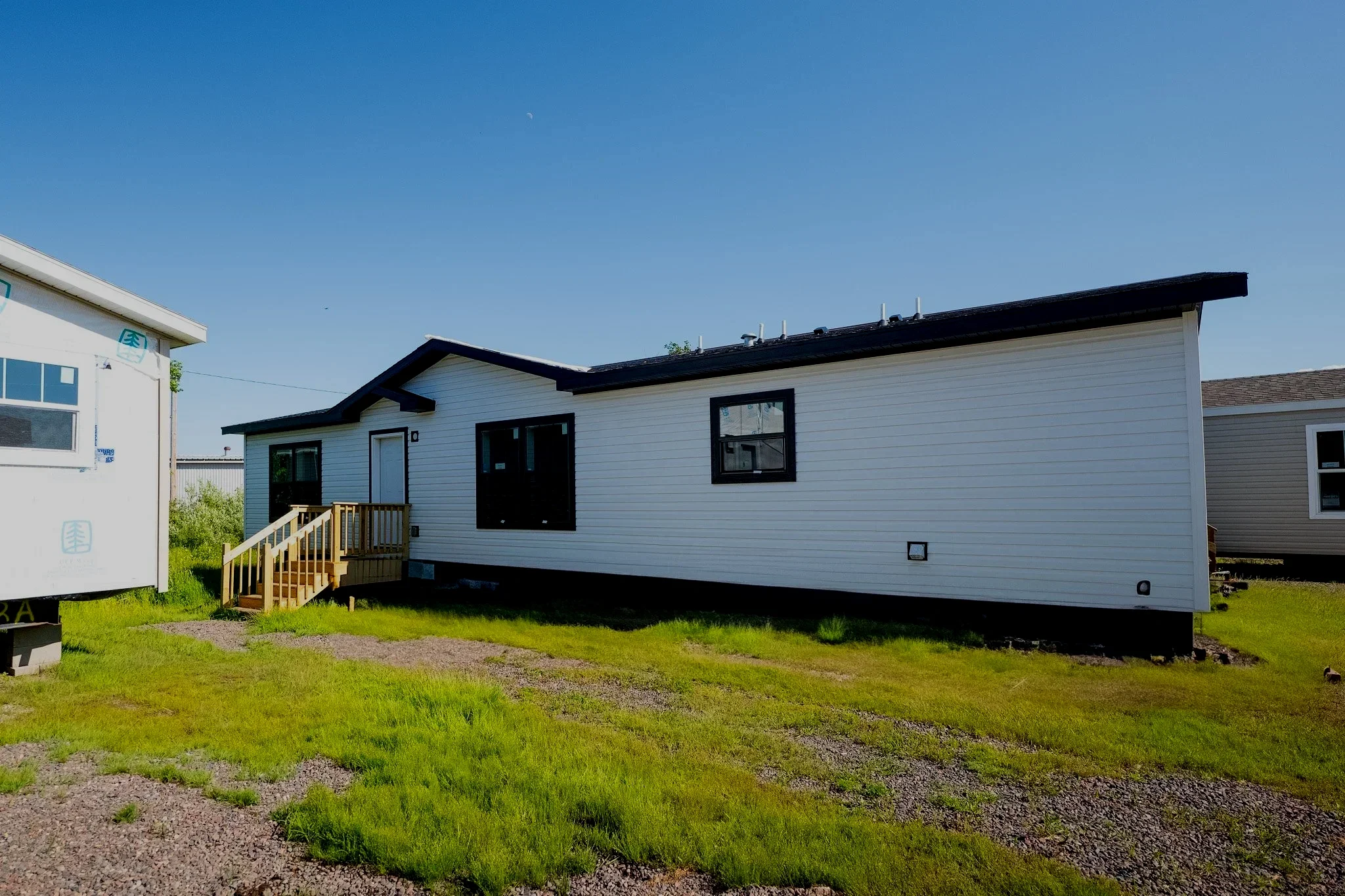
When a used home's all-in costs land within $10,000 to $20,000 of a brand-new build, the new home frequently wins the financial argument. A new home grants you an immediate manufacturer warranty, zero deferred maintenance, and modern energy-efficiency packages engineered specifically to withstand harsh Midwest winters.
The Verdict: How to Decide Which Option Fits Your Budget
When a Used Mobile Home Makes Sense:
The home is already structurally sound and does not need to be moved.
The title is perfectly clean and verified.
You are a cash buyer or possess DIY/renovation skills to handle repairs out-of-pocket.
It is a well-maintained property being sold by a trusted private party or retiree.
When a New Manufactured Home Is the Smarter Move:
You need to finance the purchase (new homes qualify for vastly superior loan terms and lower interest rates).
You want predictable monthly housing costs without surprise plumbing or roofing failures.
You are placing the home on your own land and need it to meet strict modern local zoning laws.
Explore Your Options with Liechty Homes
For over 65 years, Liechty Homes has helped home buyers across North Dakota, South Dakota, Minnesota, and Wisconsin weigh these exact options. Featuring entry-level, highly efficient new homes from premier builders like Schult Homes and BonnaVilla Homes, Liechty offers low-down-payment financing that makes buying new far more accessible than most think.
Skip the guesswork of online classifieds. Visit one of their six regional showrooms in Jamestown, Bismarck, Minot, Rapid City, Duluth, or Fergus Falls to walk through real floor plans, view actual pricing, and let their experts map out your true, all-in monthly costs.